
Dr. Paul Nogier, the RAC, and the Transition to VAS
VAS – Vascular Autonomic Signal
The Vascular Autonomic Signal (VAS) is a subtle physiological sign reflected in a qualitative change in the radial pulse in response to various stimuli. The phenomenon was first discovered by French physician Dr. Paul Nogier, the founder of auriculotherapy (ear acupuncture). In 1966, Nogier noticed that gentle mechanical stimulation at a specific point on the ear caused a detectable change in the quality of the radial artery pulse—becoming either firmer or softer—without altering the heart rate.
(Source: lidsen.com, pmc.ncbi.nlm.nih.gov)
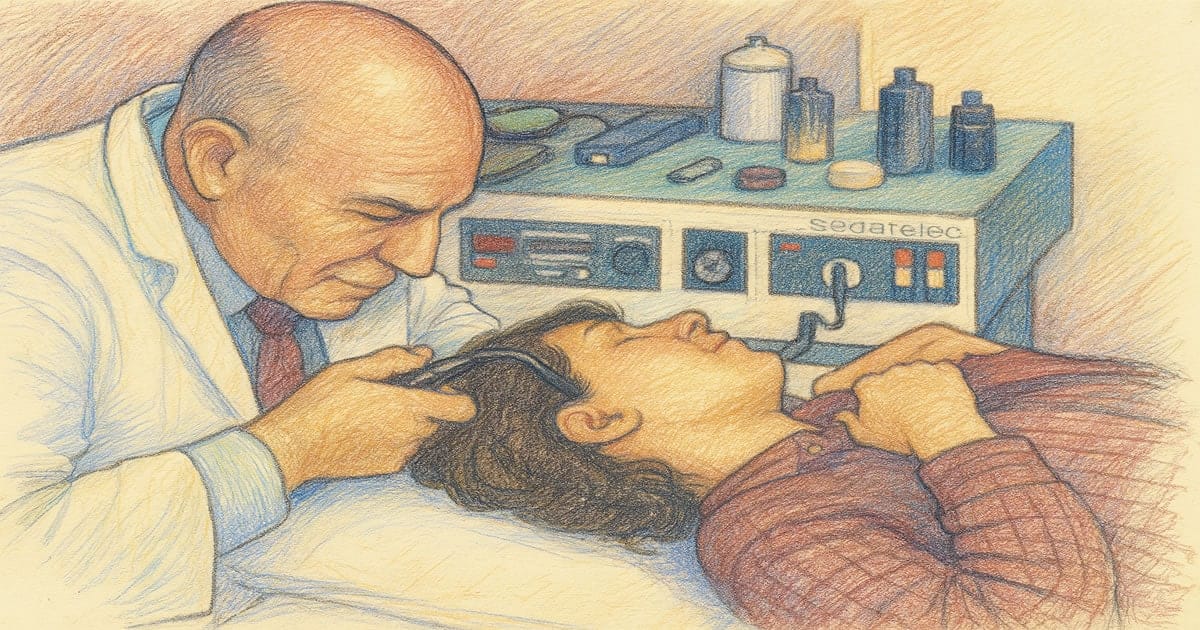
Nogier initially believed this was a reflex between the ear and the heart and termed it the Auriculo-Cardiac Reflex (Réflexe Auriculo-Cardiaque, or RAC). Over time, it became clear that the reflex was not limited to a local ear-heart connection but reflected a broader autonomic nervous system reaction via the vascular system. The term VAS – Vascular Autonomic Signal was later adopted, emphasizing the vascular nature of the signal triggered by sympathetic and parasympathetic nervous activity.
This phenomenon is also referred to as the “Nogier Pulse” or “Nogier Reflex” in honor of its discoverer.
(Source: integrateauricular.com)
During the 1970s and 1980s, Dr. Nogier and his colleagues developed the use of the RAC/VAS into a central diagnostic and therapeutic tool within what became known as Auricular Medicine. They demonstrated that RAC could be used to map points on the ear that correspond to organs and physiological functions in the body with greater accuracy than traditional ear charts.
In 1974–1975, Paul Nogier, together with Dr. Frank Bahr and Dr. René J. Bourdiol, published the Loci Auriculomedicinae – a comprehensive and precise map of the ear. This chart was not theoretical but based on empirical testing using biological ampoules (homeopathic dilutions of organs). Practitioners would place 3 ampoules. One ampoule is placed on the patient’s forehead, the patient holds another one in their hand, and the investigator uses the third ampoule to check the patient’s ear. The only point that triggered a pulse change (RAC) was identified as the reflex zone corresponding to the tested organ.
(Source: The History of Ear Acupuncture and Ear Cartography – Why Precise Mapping of Auricular Points Is Important (ResearchGate))
In this way, researchers could precisely identify auricular points linked to specific organs or pathologies, creating a detailed map of the ear. Nogier later discovered that the VAS could also be used to detect resonance frequencies in the body. He divided the surface of the body and ear into seven zones, each sensitive to a specific stimulus frequency (such as pulsed light). This led to the development of the Nogier Frequencies (A–G) for diagnostic and therapeutic use, with VAS used to confirm the most appropriate frequency for each area.
To summarize: the history of VAS begins as a clinical observation of a subtle pulse change at the ear, originally thought to be a local cardiac reflex (RAC). It evolved into a general autonomic vascular signal, and the term VAS was adopted accordingly. Dr. Nogier and his successors (including his son Dr. Raphaël Nogier and German physician Dr. Frank Bahr) established the signal as a foundational tool in modern auriculotherapy. They used it to develop ear maps, discover new points, and match resonance frequencies—advancements that laid the foundation for contemporary auricular treatment systems.